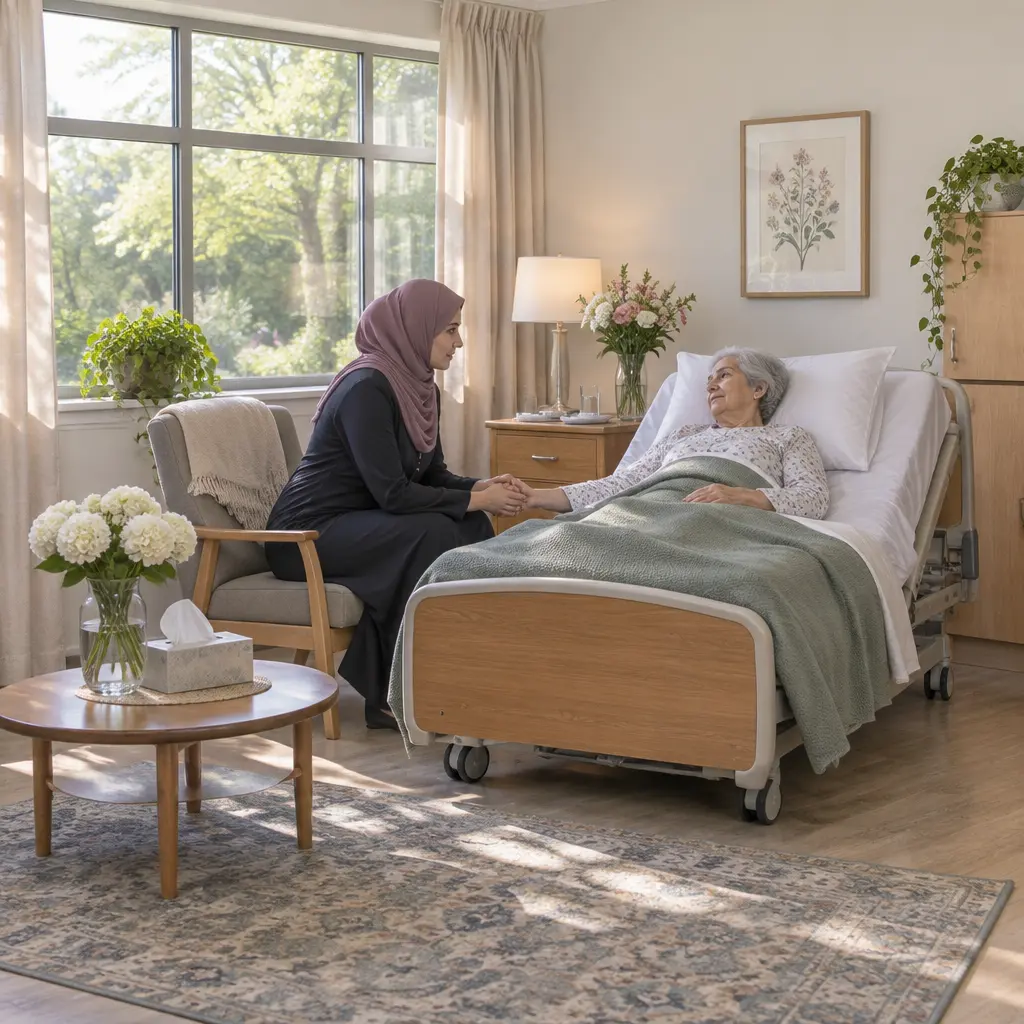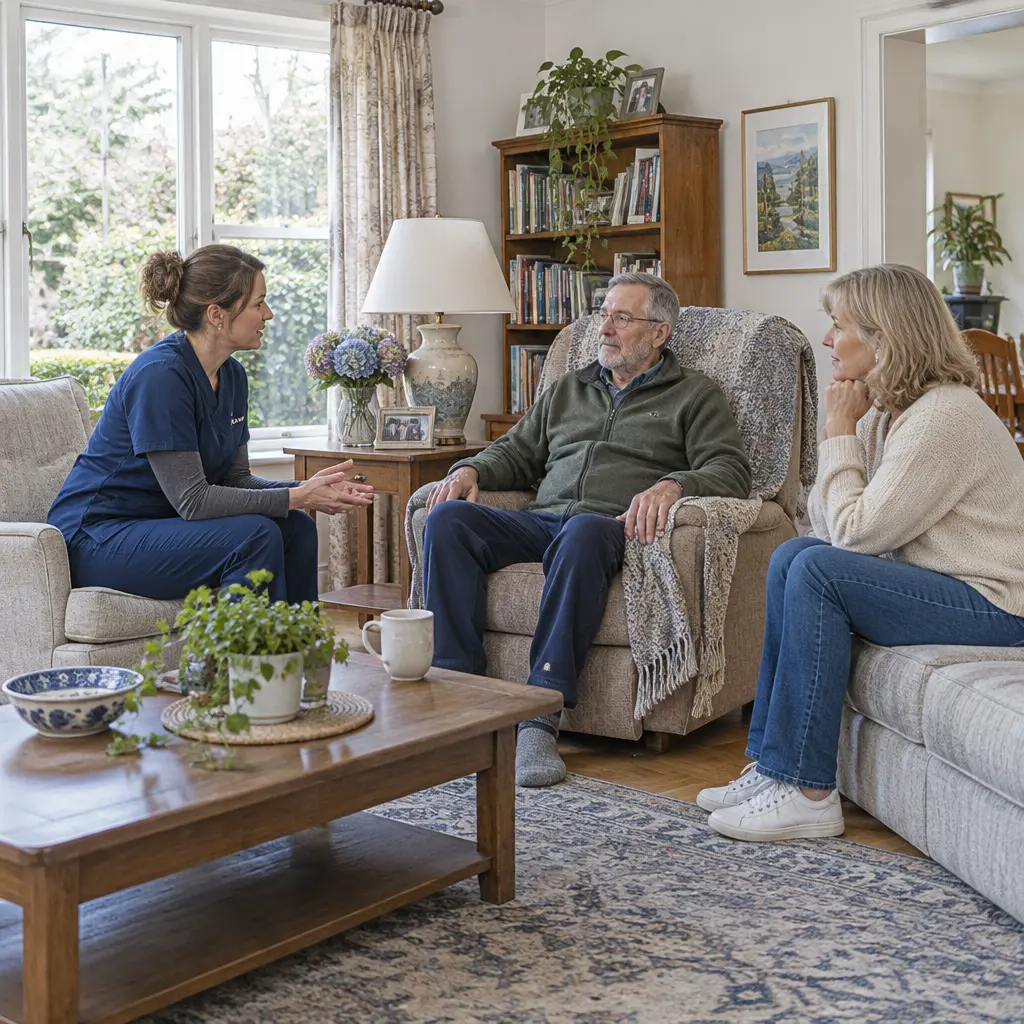
Dying at home means spending the final period of life and dying in a private residence; dying in a hospital means receiving end-of-life care in an acute-care facility. Neither setting is inherently better: the right choice depends on the person’s wishes, medical needs, available support, and access to palliative or hospice care. In the United States, 31.6% of deaths in 2022 occurred at home and 29.8% in a hospital, according to the CDC’s National Center for Health Statistics; these figures describe place of death, not whether care matched a person’s preferences. Understanding differences in comfort, treatment, caregiver demands, and practical planning can help patients and families make informed decisions.
How Place of Death Shapes End-of-Life Care
Place of death is the physical location recorded when a person dies. The National Center for Health Statistics classifies deaths by location, including residence, hospital, hospice facility, nursing home or long-term-care facility, and other places. This statistical category is not the same as care model: someone may receive hospice care at home, while hospital care may include palliative support focused on comfort.
The distinction matters because location can affect who provides care, which treatments are readily available, how family members participate, and what practical arrangements are needed. It should not be treated as a quality score. A hospital can provide essential treatment and symptom relief, while a home setting can support familiarity and privacy when adequate clinical and caregiving support is in place.
Place of death is not the same as place of care
Hospice is a care approach for people approaching the end of life, not simply a building. Medicare describes hospice as care focused on comfort and quality of life for people who meet eligibility requirements and elect the benefit. Depending on circumstances and availability, hospice services can be delivered at home, in a hospice facility, in a nursing home, or in a hospital. Palliative care can also be provided alongside treatment for serious illness and does not necessarily mean that a person has stopped pursuing disease-directed care.
The U.S. pattern has shifted toward home deaths
CDC National Vital Statistics System data show that 31.6% of U.S. deaths in 2022 occurred at home, compared with 29.8% in hospitals. These national proportions do not establish where people wanted to die, explain why deaths occurred in a particular setting, or show whether a location was planned. Age, illness, access to services, family resources, and local care capacity can all shape the outcome.
With that distinction in mind, the practical comparison is less “home versus hospital” in the abstract and more about which setting can safely and respectfully meet the person’s goals.
How Home Deaths Differ from Hospital Deaths
A home death occurs in a person’s residence, which may be their own home or that of a family member. A hospital death occurs in an inpatient hospital, where clinicians can provide continuous monitoring and urgent medical interventions. These are broad categories: home care may involve hospice nurses and physicians, while hospital care may include comfort-focused treatment, intensive care, or both at different points.
Home death: familiar surroundings and family involvement
A home setting may offer familiar surroundings, privacy, and more direct involvement for relatives and friends. It can make it easier to follow personal routines or have chosen people nearby, depending on the home and the patient’s condition. When hospice is involved, its team may help with symptom management, equipment, medication guidance, and emotional support. The exact services and response times vary by provider, location, and the person’s needs.
Home care also transfers substantial day-to-day responsibility to family members or other caregivers. They may need to help with medication schedules, personal care, mobility, meals, and communication with clinicians. Not every home has enough space, equipment, paid assistance, or available caregivers. A home death should therefore be a supported choice, not an assumption that relatives can provide unlimited care.
Hospital death: rapid access to clinical resources
A hospital offers access to clinicians, diagnostic services, medications, and interventions around the clock. This can be important when symptoms are difficult to control, a sudden crisis occurs, or the person needs treatment that cannot be provided safely elsewhere. Hospitals can also provide palliative care, though its availability and integration with other services differ among institutions.
The hospital environment may feel less private or familiar, and care can involve tests, alarms, procedures, and changing staff. These features are not universal, and hospitals can accommodate comfort-focused goals through communication, symptom management, and limits on unwanted interventions. Patients and families can ask the care team what can be adjusted to support rest, privacy, spiritual practices, and time together.
Other settings are also part of the comparison
Hospice facilities and nursing homes or other long-term-care facilities are important alternatives to both a private residence and an acute-care hospital. A hospice facility may offer a specialized setting when symptoms or caregiving needs cannot be managed at home. A nursing home may be a person’s established residence, with care arranged through facility staff and outside clinicians. The best fit depends on clinical needs, preferences, eligibility, and what is available locally.
Because no setting guarantees a particular experience, the next step is to compare how each may affect comfort, treatment, and the people providing support.
How Comfort, Treatment, and Caregiving Compare
The most meaningful comparison considers the person’s goals alongside the services each setting can reliably provide. A preference for home, for example, may be difficult to sustain if symptoms require interventions that are not available there or if caregiving support is insufficient. Conversely, a hospital stay may not be necessary for every change in condition when a hospice team can manage symptoms in another setting.
Comfort and symptom management
Comfort care means preventing or relieving distressing symptoms, such as pain, breathlessness, nausea, agitation, or anxiety. Both home-based hospice and hospital teams can provide symptom-focused care, but the available equipment, staffing, and speed of response differ. Patients and families should ask who to call after hours, what symptoms can be managed at home, and when a transfer to hospital would be recommended.
The World Health Organization estimates that 56.8 million people worldwide need palliative care each year, including 25.7 million in the last year of life. The estimate underscores that serious illness can require coordinated relief of suffering across settings. It does not mean that every person needs the same services or that palliative care is limited to the final days.
Treatment choices and changing goals
Treatment decisions concern which interventions fit the person’s priorities. Some people value hospital-based treatment when it offers a reasonable chance of recovery or relief; others prioritize avoiding burdensome procedures and spending time in a familiar place. Preferences can change as illness progresses, and choosing comfort-focused care does not mean that all medical care stops. Clinicians can explain likely benefits, burdens, and alternatives for each option.
Advance care planning helps record values and communicate decisions in advance. The National Institute on Aging recommends discussing wishes with family and health professionals and documenting preferences through tools such as advance directives, subject to state law. A plan can name a health-care decision-maker and address preferences about life-sustaining treatment, but it should be reviewed when health circumstances or priorities change.
Caregiver capacity and family needs
Caregiver capacity includes the time, health, skills, emotional readiness, and financial resources available to help someone at home. It is a practical care requirement, not a measure of how much a family cares. The National Alliance for Caregiving and AARP reported in their 2020 national study that about 53 million U.S. adults provided unpaid care to an adult or child with special needs. That broad estimate is not limited to end-of-life caregiving, but it illustrates how much care in the United States depends on unpaid support.
Before choosing home care, families can ask about respite options, paid caregiving, equipment, medication instruction, and emergency contacts. If those supports are unavailable or unsustainable, a hospital, hospice facility, or long-term-care setting may better meet the person’s needs. Caregiver safety and well-being belong in the decision alongside the patient’s preferences.
Access, cost, and local availability
Access to care depends on geography, insurance coverage, eligibility, workforce capacity, and the availability of hospice or home-health providers. Medicare hospice coverage has specific eligibility and election requirements, and coverage rules differ from those for other forms of home care. Patients should ask their insurer, clinician, or hospice provider which services are covered, what costs may remain, and whether the needed services are available in their area.
These considerations are especially important when comparing a preferred setting with a feasible one. An early conversation can reveal support gaps while there is still time to arrange services or reconsider the plan.
How to Choose and Prepare for a Setting
A useful decision begins with the person’s goals and the clinical team’s assessment of what care each setting can provide. Families can revisit the decision as symptoms, preferences, and support change. The following questions can help structure a conversation rather than turn the choice into a one-time commitment.
- Where does the person feel most comfortable, and what matters most to them now?
- Which symptoms or likely emergencies might require urgent treatment?
- What services can the hospice, hospital, or other care team provide, including after hours?
- Who will provide daily care, and what respite or backup support is available?
- What equipment, medications, transportation, and home modifications may be needed?
- Which treatments are wanted or unwanted, and where are those preferences documented?
- What coverage, eligibility rules, and out-of-pocket costs apply?
A practical plan should identify a primary contact, a backup contact, the clinician or hospice number to call, and the circumstances that would prompt emergency services or a change of setting. Patients should tell their care team if a plan is no longer meeting their goals. When preferences cannot be met in the original location, changing settings is not a failure; it is an adjustment to the person’s needs.
For instance, a person with advanced illness may hope to remain at home, with hospice support and family nearby. If breathlessness or another symptom becomes difficult to control with the available home services, the team and family might discuss a temporary hospital transfer, a hospice facility, or additional support at home. This illustrative example shows why preferences, symptom plans, and backup options need to be considered together.
Conclusion: Make the Setting Fit the Person
The difference between dying at home and dying in a hospital is not simply a difference in address. Home may offer familiarity and close family involvement, while a hospital provides immediate access to acute clinical resources; hospice and long-term-care settings can also meet important needs. U.S. mortality data show that home deaths are common, but place-of-death statistics cannot tell whether a death reflected the person’s wishes or whether the support was adequate.
The most useful next step is to discuss goals, treatment choices, symptom management, caregiver capacity, and local services with the person’s clinicians and family. Ask about palliative care and hospice early, document preferences, and revisit the plan when circumstances change. For further guidance, consult a health-care professional, a hospice provider, Medicare or the relevant insurer, and the National Institute on Aging’s advance-care-planning resources.
Sources: CDC National Center for Health Statistics, “Deaths: Leading Causes for 2022,” National Vital Statistics Reports, https://www.cdc.gov/nchs/data/nvsr/nvsr73/nvsr73-04.pdf; Centers for Medicare & Medicaid Services, “Hospice,” https://www.medicare.gov/coverage/hospice-care; World Health Organization, “Palliative Care,” https://www.who.int/news-room/fact-sheets/detail/palliative-care; National Institute on Aging, “Advance Care Planning: Advance Directives for Health Care,” https://www.nia.nih.gov/health/advance-care-planning/advance-care-planning-advance-directives-health-care; National Alliance for Caregiving and AARP, “Caregiving in the U.S. 2020,” https://www.caregiving.org/research/caregiving-in-the-us/